
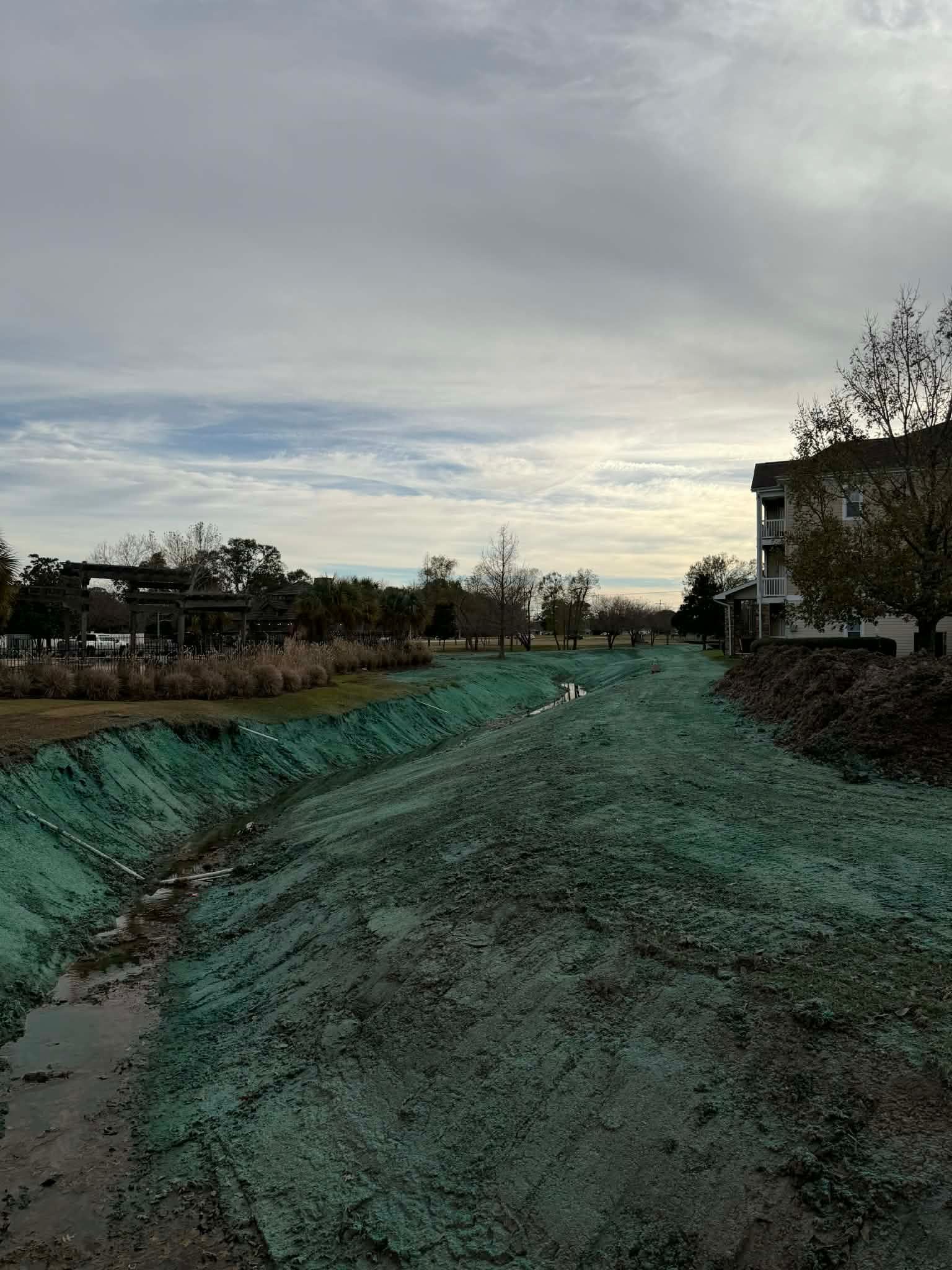
Soil Coverage That Holds Through Heavy Rain
Straw Blowing in Lafayette for freshly seeded sites exposed to Louisiana's frequent downpours
Green Shield Solutions applies straw blowing coverage designed to protect newly seeded surfaces from displacement during the high-rainfall months common across Lafayette. When seed sits exposed on slopes or open ground, even moderate storms can wash away both soil and emerging vegetation before roots take hold. Straw blowing creates a protective fiber layer that holds moisture against the soil surface while reducing the velocity of water moving across bare earth.
The process uses pneumatic equipment to evenly distribute agricultural straw across graded surfaces, creating consistent coverage that improves seed-to-soil contact and reduces evaporation during dry periods between rain events. In Louisiana environments where rainfall intensity varies unpredictably, this layer helps germinating seed maintain the moisture levels needed for root development while preventing the washout patterns that leave channels and bare patches across unprotected areas.
Request a coverage estimate based on your current site conditions and seeding timeline.
How Straw Coverage Protects Germination
Straw fibers interlock across the surface to form a mat that diffuses the impact of falling rain before water hits bare soil. This reduces the formation of surface crusts that can prevent seedlings from breaking through compacted topsoil, particularly in areas with clay-heavy soil composition. The coverage also moderates soil temperature fluctuations, keeping the surface layer cooler during midday heat and reducing the drying effect that slows germination.
Once applied, the straw layer remains visible as a golden or tan blanket across the seeded area, gradually breaking down as vegetation grows through it. You will notice that rainfall no longer creates visible rivulets or carries sediment off the site, and the soil beneath stays darker and moister between watering cycles. As grass or groundcover establishes, the straw decomposes into organic material that adds structure to the topsoil rather than requiring removal.
Straw blowing works best on slopes steeper than three-to-one ratios, drainage channels where water concentrates during storms, and large open areas where hand application would be impractical. Coverage depth is adjusted based on slope angle and expected rainfall intensity, with steeper grades receiving heavier application to prevent movement during runoff events.
What Property Owners Usually Ask
Straw blowing supports commercial site development, residential subdivision grading, utility corridor restoration, and roadside projects where quick stabilization matters before final landscaping begins.
What types of sites benefit most from straw blowing?
Sites with freshly applied seed on slopes, drainage areas, or open ground that will face rain before vegetation matures benefit from the coverage, particularly during Louisiana's wet season from late spring through early fall when storm frequency increases.
How does straw blowing differ from erosion blankets?
Straw blowing provides loose fiber coverage that decomposes naturally and works well for moderate slopes and flat areas, while erosion blankets use woven or stitched materials anchored with stakes for steeper grades or higher-velocity water flow.
When should straw be applied relative to seeding?
Straw application happens immediately after seed distribution to prevent the first rainfall from displacing seed before it can germinate, typically within the same day or before any forecasted rain event.
What factors affect coverage thickness?
Slope steepness, soil type, expected rainfall intensity, and seed variety all influence how much straw is applied per square foot, with heavier coverage used where water velocity will be higher during storms.
How long does straw remain visible on the site?
Straw fibers begin breaking down within weeks and typically decompose fully within one growing season as vegetation grows through the layer, leaving no material that requires cleanup or removal.
Green Shield Solutions applies straw coverage using calibrated equipment that ensures even distribution across graded surfaces without gaps that leave soil exposed. Schedule straw blowing services to coordinate with your seeding timeline and protect your investment before the next storm arrives.