
Grass That Takes Hold and Stays
Hydroseeding in Lafayette for properties needing faster vegetation establishment and more reliable coverage than broadcast seeding provides
Green Shield Solutions handles hydroseeding across residential, commercial, and large-scale properties in Lafayette, Louisiana where traditional seeding methods often leave gaps or fail to establish before the next storm cycle. The hydroseeding process delivers seed, mulch, and moisture-retaining additives in a single application, creating immediate contact between seed and soil while holding everything in place during germination. Properties with exposed soil, new construction sites, and areas prone to runoff benefit from this method because it works faster and holds better than dry seed scattered across unprepared ground.
Hydroseeding combines grass seed with a wood or paper mulch slurry that bonds to the soil surface, keeping seeds from washing away during Louisiana's frequent afternoon thunderstorms while retaining moisture between rain events. The spray application allows for even distribution across slopes, drainage channels, and uneven terrain where hand seeding would produce inconsistent results. Custom seed and mulch mixtures are selected based on site conditions, sun exposure, and intended use, supporting stronger root development and quicker ground coverage that helps prevent soil displacement.
Request a hydroseeding estimate that includes site evaluation and mixture recommendations based on your property's soil type and drainage patterns.
What Happens During and After Application
The hydroseeding equipment sprays a pressurized mixture across prepared soil, covering large areas quickly while ensuring seed stays put. Site preparation involves clearing debris and grading uneven spots so the slurry adheres properly, and the application itself adjusts for wind conditions and slope angles to prevent pooling or thin coverage. The mulch layer dries into a protective mat that holds seeds in place and reduces evaporation, which matters during the stretch between spring rains and summer heat when moisture consistency determines whether grass takes root or dies back.
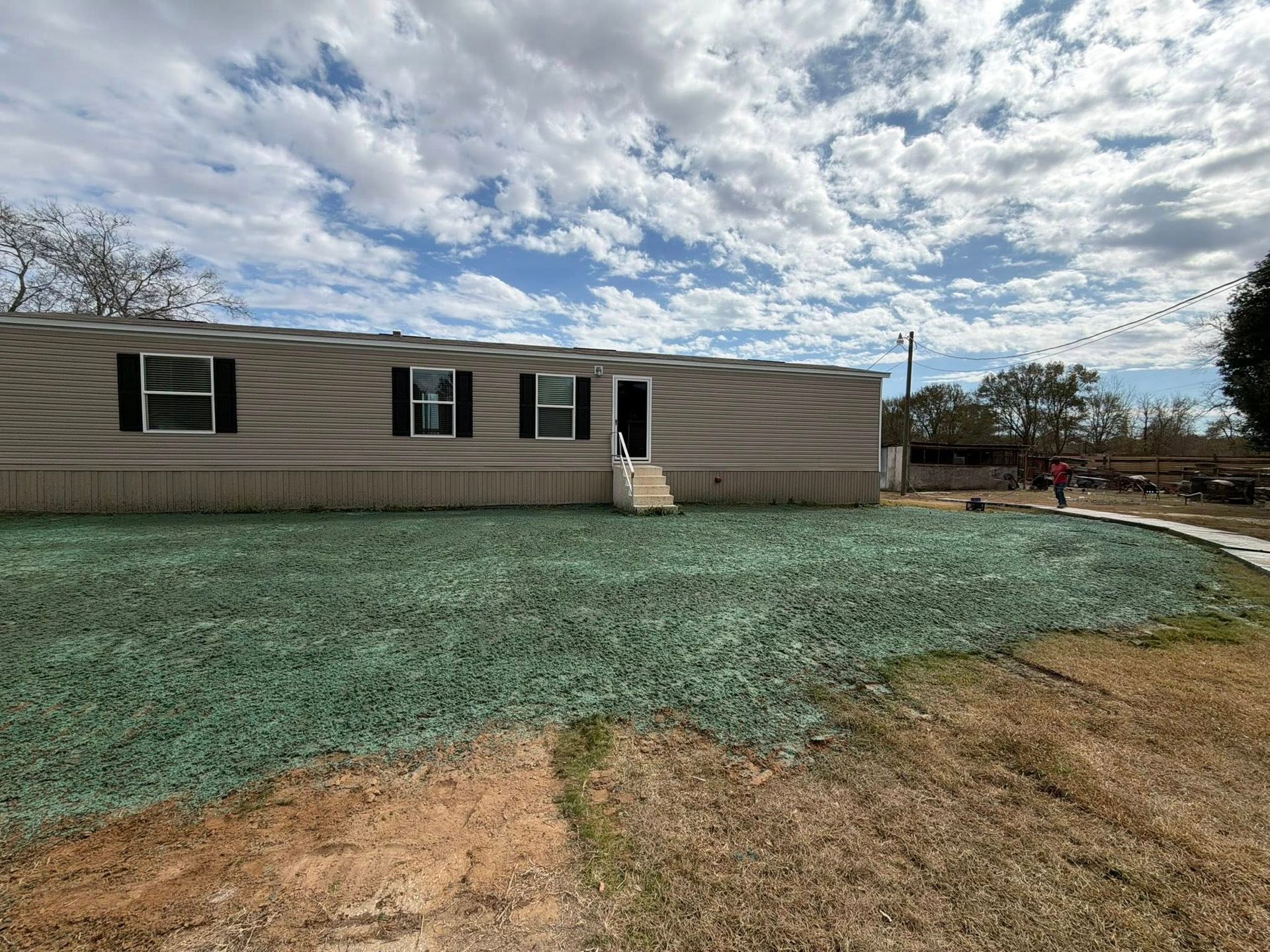
Once hydroseeding is complete, you'll notice a green-tinted layer covering the soil that darkens as it dries, and within seven to fourteen days, depending on temperature and rainfall, grass seedlings begin emerging through the mulch. The coverage appears more uniform than traditional seeding because every seed was delivered with its own moisture and mulch package, and bare spots are rare unless the site experiences erosion before germination completes. As grass matures, the mulch breaks down naturally, leaving behind established turf that holds soil during runoff events and reduces the dust and mud common on undeveloped properties.
Hydroseeding works best on graded sites where water doesn't pool, and the method covers roadside projects, subdivision lots, commercial drainage areas, and slopes more efficiently than sod installation or hand seeding. Applications for new construction focus on stabilizing disturbed soil quickly, while existing properties use hydroseeding to restore eroded sections or fill in areas where grass has failed repeatedly due to compaction or poor seed-to-soil contact.
Questions Property Owners and Contractors Ask
Hydroseeding projects in Lafayette often involve specific site conditions, timing considerations, and outcome expectations. Understanding what the process requires and how local weather affects establishment helps you decide if this method fits your project.
What site preparation does hydroseeding require before application?
The area needs grading to remove standing water zones, debris cleared, and any compacted soil loosened so the slurry bonds properly and seeds make contact with workable ground.
How long before grass appears after hydroseeding is completed?
Germination typically begins within seven to fourteen days depending on temperature and consistent moisture, with full coverage developing over four to six weeks as roots establish and blades thicken.
Why does hydroseeding perform better than broadcast seeding on slopes?
The mulch slurry adheres to angled surfaces and holds seeds in place during rain, preventing the downhill washing that causes bare strips and clumped growth with dry seed methods.
When is the best time to schedule hydroseeding in Lafayette?
Spring and early fall offer the most consistent moisture and moderate temperatures, though projects can proceed year-round if irrigation support is available during dry periods or summer heat.
What factors affect hydroseeding cost and application thickness?
Site size, slope steepness, access for equipment, and the seed mixture selected all influence pricing, with heavier mulch applications used on steeper grades or areas with faster runoff patterns.
Green Shield Solutions tailors hydroseeding applications to match soil conditions and project goals across Lafayette and surrounding Gulf Coast properties. Schedule a project consultation to review site access, grading needs, and mixture options that support long-term vegetation success and erosion reduction.