
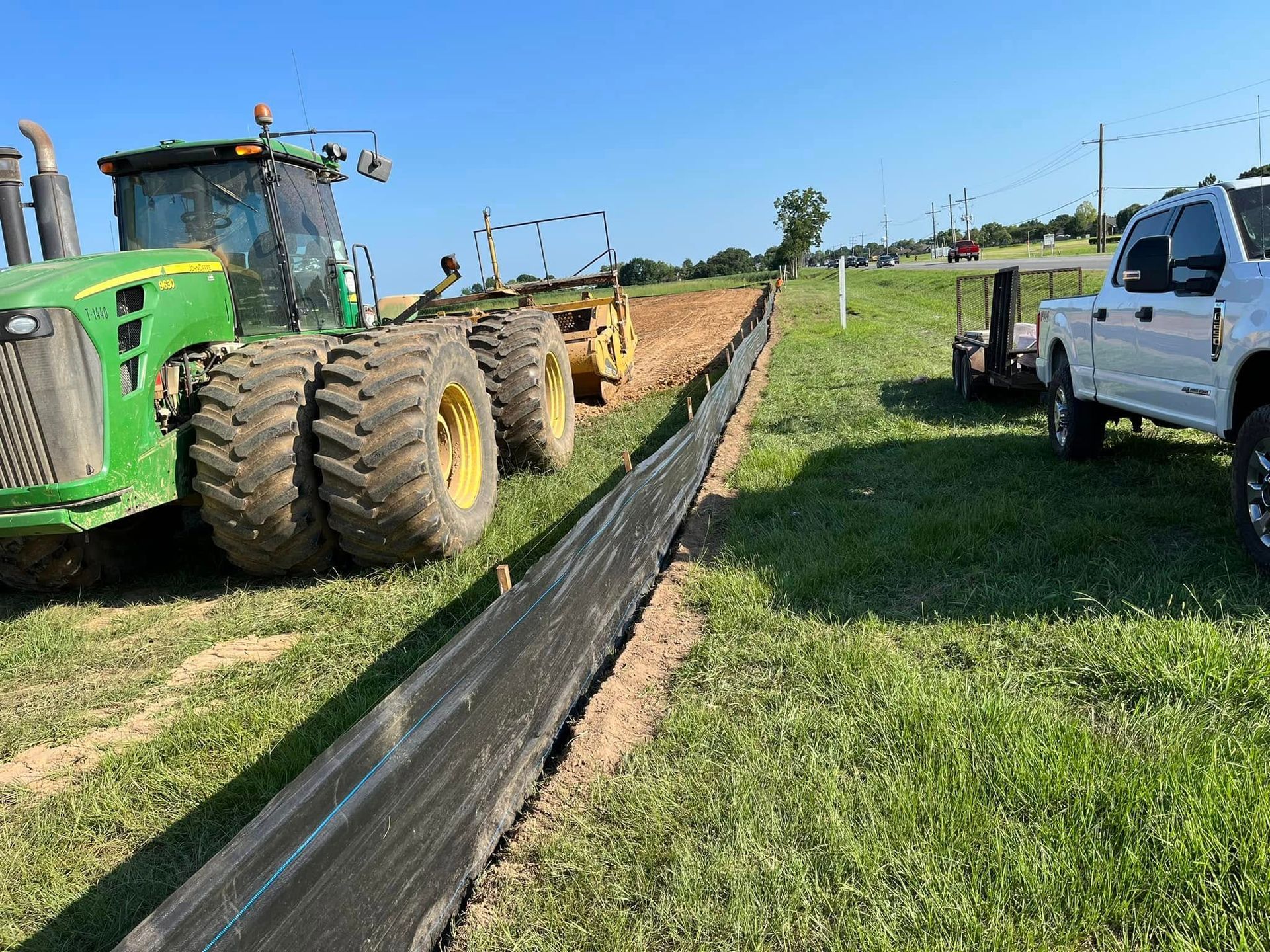
Sediment Barriers That Function Under Pressure
Silt Fence Installation in Lafayette for construction sites needing temporary sediment control before grading and excavation begin
Runoff from construction sites carries soil particles that clog storm drains, coat neighboring properties, and violate sediment control regulations enforced during permitting and inspection phases. Silt fences create a permeable barrier along site perimeters and slope bases where water slows enough for suspended sediment to settle out before runoff leaves the property. Green Shield Solutions installs silt fencing for contractors and developers managing commercial construction, land clearing, utility work, and residential developments in Lafayette, Louisiana where compliance with stormwater protection rules requires visible sediment control measures before earth-moving equipment operates.
Installation involves trenching a narrow slot along the planned fence line, embedding the fabric bottom into the trench, backfilling with compacted soil, and anchoring the fence to posts driven deep enough to resist water pressure during heavy flow. The fabric allows water to pass while trapping particles, and proper placement follows contour lines so water spreads along the fence length instead of concentrating at low points where pressure would tear the fabric or topple posts.
Schedule silt fence installation before site disturbance begins to avoid delays caused by inspections that halt work until sediment controls are functioning.
What Proper Installation Requires
Silt fences only work when the fabric edge sits below grade in compacted soil, creating a seal that forces water through the fabric instead of underneath it. Posts are spaced close enough to prevent sagging between supports, and the fabric faces upslope so water pressure pushes the material against the posts rather than pulling it away. Louisiana's intense thunderstorms test these installations immediately, and fences that weren't trenched properly or lack adequate post depth fail during the first significant runoff event, releasing the sediment they were meant to contain.
Once silt fencing is installed correctly, you'll observe water pooling briefly behind the barrier during rain events, then slowly filtering through while sediment collects on the upslope side. The fabric stays upright through multiple storm cycles, and sediment buildup becomes visible as a soil berm forms along the fence line. Maintenance involves removing accumulated sediment before it reaches half the fence height, which restores capacity and prevents overtopping that would wash captured material past the barrier.
Silt fences function as temporary measures during active construction, typically remaining in place for several months until permanent vegetation establishes and soil stabilization removes the risk of large-scale sediment movement. The barriers complement other erosion control methods like straw application and seeding, creating a layered defense that addresses both soil displacement on slopes and sediment containment at site boundaries.
What Builders and Contractors Want to Know
Silt fence installation decisions involve timing, placement strategy, and maintenance requirements that affect both compliance and site protection throughout construction phases.
What determines where silt fences get placed on a construction site?
Barriers install along property boundaries where runoff exits the site, at the base of slopes where sediment-laden water collects, and around storm drain inlets that connect to municipal systems requiring protection from sediment intrusion.
How deep must the trench be for silt fence fabric to prevent water from flowing underneath?
The fabric embeds at least six inches below grade in compacted soil, creating a subsurface seal that forces water through the permeable material instead of bypassing the barrier through gaps at ground level.
When does accumulated sediment behind a silt fence require removal?
Once sediment buildup reaches halfway up the fence height, capacity drops significantly and the risk of overtopping increases, so removal restores filtering function and prevents barrier failure during subsequent rain events.
Why do silt fences fail during storms if installation isn't done correctly?
Fences without trenched fabric allow water to undercut the barrier, and inadequate post spacing or depth lets water pressure push the fence over, releasing trapped sediment and eliminating the protection needed for compliance.
What inspection issues arise from silt fence problems on Lafayette construction sites?
Inspectors halt work when barriers are missing, improperly installed, or not maintained, and projects face fines or delays until corrections are made and sediment controls pass re-inspection under stormwater permit terms.
Green Shield Solutions installs silt fencing that meets sediment control standards for construction projects across Lafayette and surrounding Gulf Coast areas. Contact us to coordinate installation before site work begins and ensure barriers are positioned and anchored to handle runoff conditions typical of Louisiana storm patterns.