
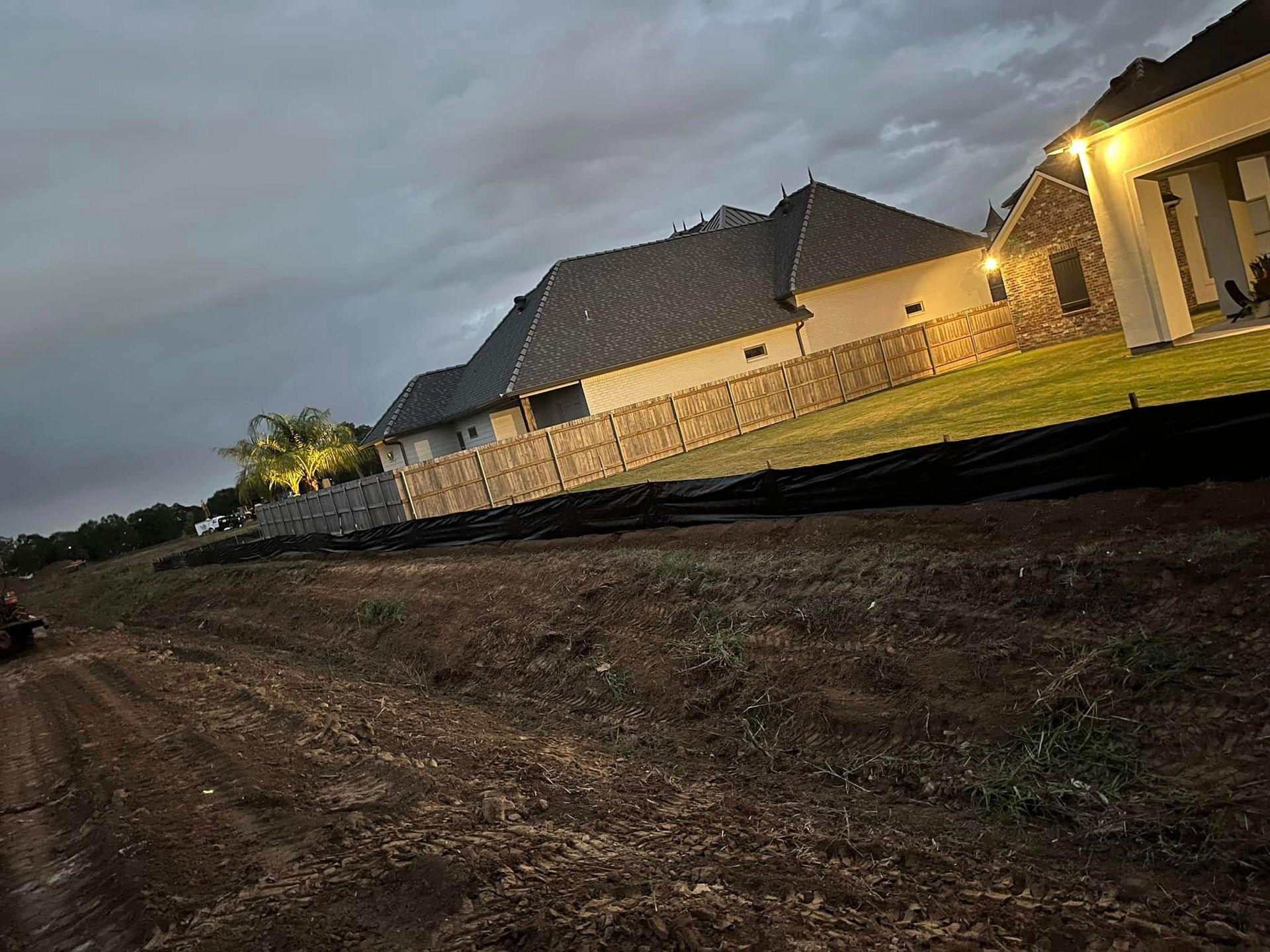
Embankments That Stop Moving Downhill
Slope Stabilization in Lafayette for drainage channels, elevated terrain, and properties experiencing soil movement
Soil on slopes steeper than four-to-one ratios begins moving downhill whenever rainfall saturates the surface layer, creating washouts that deepen with each storm until channels form and undermine infrastructure above or below the grade. Green Shield Solutions installs slope stabilization systems across Lafayette properties where embankments, berms, or drainage corridors show signs of active erosion or require reinforcement before vegetation can establish enough root mass to hold soil in place. Louisiana's rainfall patterns deliver enough water volume in single events to strip topsoil off unprotected slopes before grass or groundcover can mature.
Stabilization begins with evaluating slope angle, soil composition, and drainage patterns to determine whether vegetation alone will hold the grade or whether erosion control products are needed to reinforce the surface during the establishment period. Techniques include installing erosion control blankets anchored with stakes, applying seed with tackifiers that bind to soil particles, and shaping drainage paths that reduce water velocity as runoff moves downslope.
Schedule an on-site assessment to identify which sections of your property require stabilization before the next heavy rain cycle.
Why Slopes Fail and How to Stop It
Slope failure happens when the weight of saturated soil exceeds the friction holding it against the grade, causing the surface layer to slide or wash away in sheets. This process accelerates on slopes where vegetation has been cleared for construction or grading, leaving nothing to anchor the topsoil. Stabilization systems work by holding soil in place mechanically while roots develop enough density to take over that function.
After stabilization is complete, you will see that runoff no longer carves visible channels down the slope, and soil remains in place even after heavy storms that previously caused washouts. Vegetation grows uniformly across the grade rather than leaving bare patches where erosion removed seed and topsoil. The slope surface stays firm underfoot rather than showing soft spots or slumping areas where soil has shifted.
Stabilization work includes grading adjustments that redirect concentrated flow away from vulnerable sections, installing drainage features that move water off the slope before it gains enough velocity to cause damage, and selecting seed varieties with root structures suited to holding steep grades. Properties with clay soils may require additional surface treatment to improve infiltration and reduce runoff volume.
Answers to Frequent Service Questions
Slope stabilization addresses common challenges faced by commercial developments, residential properties with elevated terrain, and infrastructure projects throughout the Lafayette region.
What slope angles require professional stabilization?
Slopes steeper than three-to-one ratios typically need erosion control reinforcement beyond vegetation alone, while grades approaching two-to-one or steeper often require engineered solutions with anchored blankets or terracing to prevent movement during saturated conditions.
How does Louisiana rainfall affect slope stability?
Rainfall intensity in the Gulf Coast region often delivers several inches within hours, saturating soil faster than it can drain and creating conditions where surface layers lose cohesion and begin sliding downhill.
When is the best time to stabilize a slope?
Stabilization should happen before the wet season begins in late spring, giving vegetation time to establish root systems before storm frequency increases through summer and fall.
What materials are used to reinforce slopes?
Erosion control blankets made from natural or synthetic fibers, biodegradable mesh that holds seed in place, and tackifiers that bind soil particles together are common reinforcement materials applied based on slope angle and expected water flow.
How long does it take for stabilization to become effective?
Mechanical reinforcement works immediately to hold soil, while vegetation-based stabilization becomes fully effective within one to two growing seasons as root density increases enough to replace temporary materials.
Green Shield Solutions evaluates slope conditions and installs stabilization systems tailored to your property's grade, soil type, and drainage characteristics. Contact us to arrange a slope assessment and prevent further soil loss before erosion worsens.